
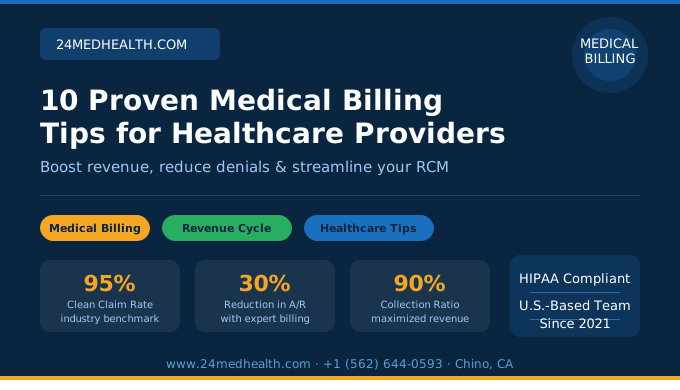
10 Proven Medical Billing Tips Every Healthcare Provider Should Know

For healthcare providers, delivering quality patient care is the top priority — but without an efficient billing process, even the most respected practices can suffer financially. Claim denials, delayed reimbursements, and coding errors silently drain revenue every single day. The good news is that most billing inefficiencies are entirely preventable.
Whether you manage billing in-house or work with a revenue cycle management partner, these 10 proven medical billing tips will help you streamline operations, protect your revenue, and keep your practice financially healthy.
1. Verify Patient Eligibility Before Every Appointment
One of the most common — and costly — billing mistakes is failing to verify a patient’s insurance eligibility before their visit. Always confirm coverage, co-pays, deductibles, and authorization requirements at least 24 hours in advance. A simple eligibility check can prevent the majority of front-end claim denials.
2. Use Accurate and Specific Medical Codes
Vague or incorrect CPT and ICD-10 codes are a leading cause of claim rejections. Ensure your coding team stays current with annual code updates and assigns the most specific codes supported by clinical documentation. Upcoding and undercoding both carry serious financial and compliance consequences.
3. Submit Clean Claims the First Time
A clean claim rate above 95% is the industry standard for high-performing practices. Achieving this requires thorough pre-submission reviews — checking for missing information, incorrect patient data, and mismatched diagnosis-procedure code pairs. First-pass approval means faster payment and fewer administrative headaches.
4. Track and Manage Your Accounts Receivable Closely
Aging accounts receivable is a silent revenue killer. Establish a strict A/R follow-up schedule: review claims at 30, 60, and 90 days. Any balance sitting beyond 90 days warrants immediate attention. Proactive A/R management can recover thousands in revenue that would otherwise be written off.
5. Develop a Strong Denial Management Process
Never accept a denial at face value. Each denied claim should be reviewed, categorized by reason, and appealed promptly if warranted. More importantly, analyze denial patterns monthly to identify root causes and prevent recurring issues. A systematic denial management process can significantly improve your collection ratio over time.
6. Ensure Thorough and Timely Clinical Documentation
Billing can only be as strong as the documentation behind it. Providers must document all services rendered with clarity and specificity — including diagnoses, medical necessity, procedures performed, and time spent. Incomplete or vague documentation is one of the top triggers for both denials and compliance audits.
7. Stay Current with Payer-Specific Rules
Each insurance payer — Medicare, Medicaid, and commercial carriers — has its own billing guidelines, fee schedules, and prior authorization requirements. Billing teams must stay updated on payer-specific policies to avoid unnecessary denials. Subscribing to payer bulletins and conducting regular policy reviews is a best practice for any high-performing billing department.
8. Prioritize HIPAA Compliance at Every Step
Medical billing involves highly sensitive patient data, and HIPAA compliance is non-negotiable. Ensure all staff are trained on privacy protocols, that patient information is transmitted through secure channels, and that your billing software meets current security standards. Non-compliance exposes your practice to significant financial penalties and reputational damage.
9. Conduct Regular Internal Billing Audits
Periodic billing audits help identify inefficiencies, coding errors, and compliance gaps before they become costly problems. Review a sample of claims across different providers and payers each quarter. Audits not only protect your practice from external scrutiny but also reveal opportunities to capture revenue you may currently be missing.
10. Consider Partnering with a Professional Medical Billing Service
Managing billing in-house demands significant time, expertise, and technology investment. Many practices — from small clinics to large multi-specialty groups — find that outsourcing to a professional revenue cycle management company like 24medhealth delivers measurably better results. With certified billing experts, real-time analytics, and a dedicated account manager, you can reduce administrative burden while maximizing reimbursements.
Final Thoughts
Efficient medical billing is not just an administrative function — it is the financial engine of your practice. By implementing these tips, you can reduce denials, accelerate cash flow, and create a more sustainable revenue cycle. If your current billing process is falling short, it may be time to bring in experts who can deliver the results your practice deserves.
Ready to optimize your revenue cycle? Contact 24medhealth today for a free consultation and discover how our certified billing professionals can transform your practice’s financial performance.
